

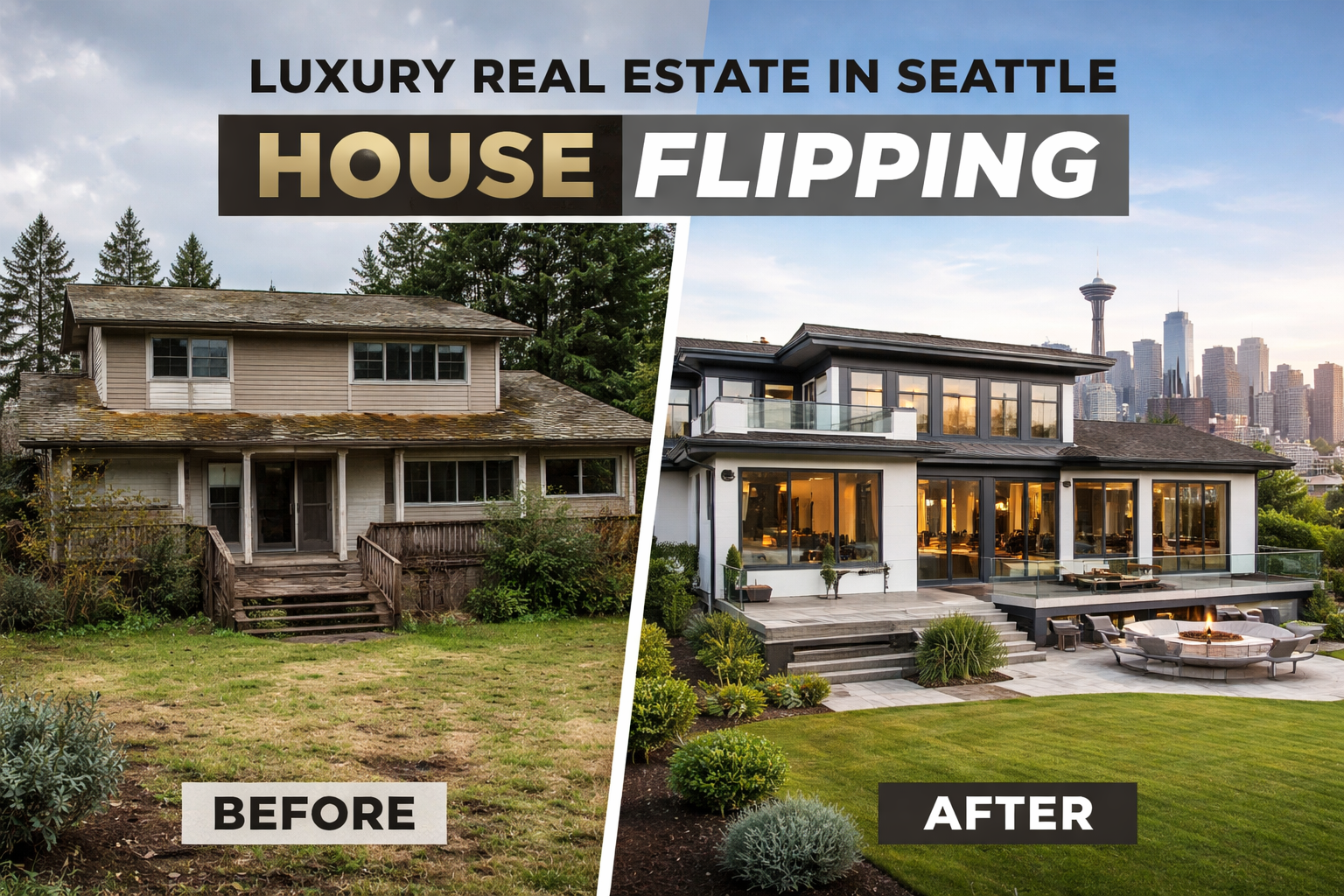
Flipping houses in Seattle is no small feat.
With a rapidly changing market, diverse neighborhoods, and increasingly sophisticated buyers, it’s easy to feel overwhelmed—or worse, make expensive mistakes.
But the truth is…
The best investors win before they ever buy the deal.
In this guide, we’ll break down:
- 5 proven techniques to make your flips stand out
- And the underwriting framework that separates profitable investors from everyone else
1. Scout for the Next “Hot” Neighborhoods
Seattle is a patchwork of micro-markets.
Neighborhoods like Rainier Beach, SoDo, and parts of West Seattle have shown how quickly demand can shift when revitalization begins .
The key is identifying:
- Areas with incoming development
- Shifting buyer demand
- Price gaps compared to surrounding neighborhoods
This is where you create margin on the buy.
2. Incorporate Smart Technology for the Win
Seattle buyers expect more.
Smart thermostats, security systems, lighting, and appliances aren’t luxuries anymore—they’re baseline expectations .
Adding these features:
- Increases perceived value
- Differentiates your property
- Helps justify stronger pricing
In competitive situations, this can be the deciding factor.
3. Go for High-Quality, Low-Maintenance Finishes
Seattle’s climate demands durability.
Cheap finishes don’t just look bad over time—they cost you during resale.
Think:
- LVP flooring over hardwood alternatives
- Quartz or granite countertops
- Materials built to handle moisture and wear
Buyers are willing to pay more for homes that feel finished and future-proof .
4. Create a Memorable First Impression with Curb Appeal
First impressions drive emotional decisions.
And emotional decisions drive offers.
Simple upgrades like:
- Fresh exterior paint
- Clean landscaping
- Modern entryways
…can dramatically increase perceived value before a buyer even walks inside .
5. Sustainability is Key in Seattle — Go Green
Seattle buyers are highly eco-conscious.
Energy-efficient upgrades, solar options, and sustainable materials don’t just feel good—they sell better .
 But Here’s Where Most Investors Still Lose Money…
Everything above improves your upside.
But none of it protects you from a bad deal.
That’s where underwriting clarity comes in.
6. ARV (After Repair Value): The Foundation of the Deal
Your ARV determines your ceiling.
Get this wrong—and everything else falls apart.
A strong ARV analysis includes:
- Recently sold comps (not active listings)
- Similar size, layout, and condition
- Neighborhood-specific demand trends
If you’re stretching comps to “make the deal work”…
It’s not a deal.
7. Debt Structure: Where Deals Quietly Fail
You can execute everything right—and still lose money because of financing.
Before closing, you need full clarity on:
- Interest rate
- Loan terms and duration
- Monthly holding costs
- Points, fees, and closing costs
Because every extra month you hold the property cuts into your margin.
In today’s market:
Time = Risk
If not, it’s too tight.
8. Market Trends: Hyper-Local > Headlines
You’ll always hear:
- “Rates are high”
- “Buyers are hesitant”
- “The market is shifting”
That’s noise without context.
Real estate is hyper-local—and even within Seattle, neighborhoods behave differently .
You need to understand:
- Days on market for renovated homes
- Buyer demand at your price point
- What finishes and layouts are actually selling
9. Rehab Budget: Precision Over Guesswork
This is where most investors underestimate—and pay for it.
A real rehab budget includes:
- Itemized scope of work
- Labor + material costs
- Contingency reserves
- Timeline expectations
And most importantly:
Vetted vendors who can execute.
Because:
- Bad execution = blown timelines
- Blown timelines = higher costs
- Higher costs = reduced profit
Final Thoughts: The Investors Who Win… Think Differently
Flipping houses successfully isn’t about chasing deals.
It’s about eliminating risk before you ever take action.
The formula is simple—but not easy:
- ARV sets your ceiling
- Debt structure protects your downside
- Market trends guide your decisions
- Execution determines your outcome
Layer that with:
- Strong neighborhood selection
- Smart upgrades
- Durable finishes
- Strategic positioning
And now you’re not guessing…
You’re operating with clarity.

Check out this article next