

Comparative Market Analysis in Seattle
A comparative market analysis is a pricing recommendation built from what comparable homes actually sold for, what is competing with yours right now, and what condition and prep would change. It is prepared by a licensed agent, and it is the number a listing strategy is built on. It is not an appraisal - that is a separate, regulated product a lender orders from a licensed appraiser - and any page offering you a 'free appraisal' is describing a CMA.
What a CMA Actually Includes
| Component | What it covers | Why it moves the number |
|---|---|---|
| Comparable sold properties | Recent sales genuinely similar in location, size, type, and condition | This is the analysis. Weak comparables produce a confident-looking number that the market will not support. |
| Active competing inventory | What a buyer would see alongside your home today | You are priced against what is available, not only against what already sold. |
| Expired and withdrawn listings | Homes that failed to sell, and at what price | Shows where the market's ceiling actually sat, which sold comparables alone will not reveal. |
| Condition and prep assessment | Current condition against what preparation would change | Determines whether prep spend returns, and separates as-is value from prepared value. |
| Adjustments | Documented differences between your home and each comparable | Where judgment enters. These should be visible to you, not buried. |
| Pricing strategy | A recommended list price and the reasoning, including timing against competing inventory | The recommendation is the deliverable; the number alone is not actionable. |
CMA, Appraisal, and Automated Estimate - the Real Differences
| CMA | Appraisal | Automated estimate | |
|---|---|---|---|
| Who produces it | Licensed real estate agent | Licensed or certified appraiser | Algorithm, no human review |
| Typical purpose | Setting a list price or an offer strategy | Lender's collateral decision; some legal and tax uses | Casual orientation only |
| Sees inside the home | Yes | Yes, in a full appraisal | No |
| Accepted by a lender | No | Yes | No |
| Typical cost | Free | Roughly $500-$900 in Washington, typically paid by the buyer; larger or higher-value homes cost more | Free |
The practical consequence: a CMA sets your list price, an appraisal can stop your buyer's financing, and an automated estimate should not drive either decision.
Why Comparable Selection Decides Everything
Two agents can analyse the same home and arrive at prices far enough apart to change the outcome, using the same public data. The difference is almost always which comparables they chose and how they adjusted for the gaps. A comparable that is close geographically but different in condition, or similar in size but on a materially different lot, will pull the number in a direction the market does not actually support.
This is why the reasoning matters more than the figure. A CMA you cannot interrogate is a number you are asked to trust. Ask which comparables were used, why those and not others, and what was adjusted - a well-built analysis holds up to that, and a thin one does not.
A HIGH CMA IS NOT A FAVOUR
Some agents price high to win the listing, then negotiate the seller down after weeks of no activity. The cost is real: a listing that sits accumulates days on market, invites the assumption that something is wrong with it, and frequently closes below what a correctly priced listing would have achieved. The number should be defensible, not flattering.
FAQ
Frequently Asked Questions
No. A CMA is a licensed agent's pricing recommendation, used to set a list price or shape an offer. An appraisal is a separate, regulated product produced by a licensed or certified appraiser, usually ordered by a lender to support a financing decision. A lender will not accept a CMA in place of an appraisal. If a site offers you a 'free home appraisal', what is being offered is a CMA.
An automated estimate works from public records and past sales without seeing the home. It cannot assess condition, layout, updates, or what preparation would change, and it cannot weigh what is competing with your home on the market right now. Those are the variables that move the price most in a market with sharp band separation
Anything the public record does not show: improvements and their approximate dates and cost, known issues, permits, HOA details where relevant, and your timeline. Condition and updates are exactly what an automated estimate misses, so this is where you materially improve the analysis.
Team model – the group is framed as "strategists, advisors, and partners" with 9+ team members (roster includes Kelly Wride, Aylar Oskuei, Alexandru Motroc, Morgan Reick, and others), not a solo operation.
Seattle & the Eastside
Find your place. Plan your next move.
Explore local communities and real estate resources to help you buy, sell, and understand your next step.
Your move starts with a conversation.
Tell us where you are and where you want to be. We’ll help you map the next step.
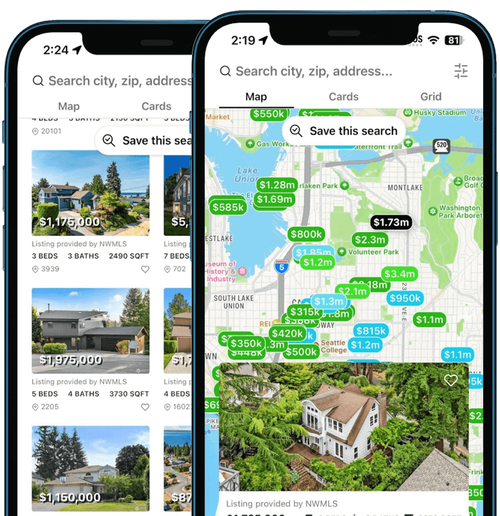
Download Our App
Smart real estate, right in your pocket.
Search listings, track market trends, and connect with our team—all in one place. Experience data-driven insights and tools designed to make buying, selling, and investing simple.